
Now Reading: Garlic Benefits Skin: 7 Potential Benefits and Safety Tips
-
01
Garlic Benefits Skin: 7 Potential Benefits and Safety Tips
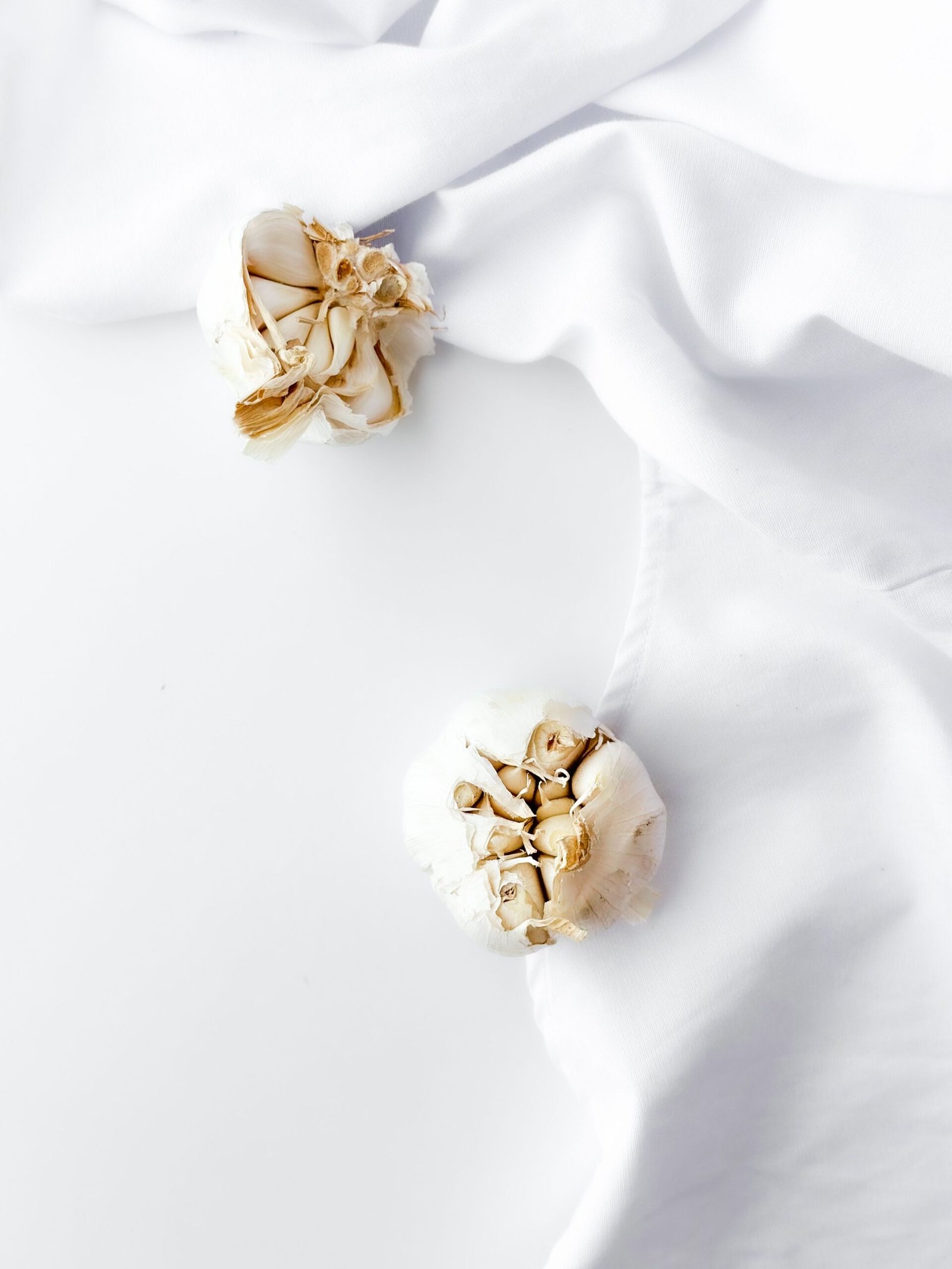
Most people know garlic for its strong flavor in cooking, but it has also caught attention in natural skincare. Claims about garlic’s benefits for skin come from its sulfur compounds, antioxidants, and antimicrobial effects. Some people even try rubbing raw garlic on pimples.
However, just because something is natural does not mean it is safe. Fresh garlic has active compounds, but it can also irritate or burn your skin. Understanding the evidence helps you tell the difference between helpful research and risky home remedies.
Is garlic beneficial for the skin?
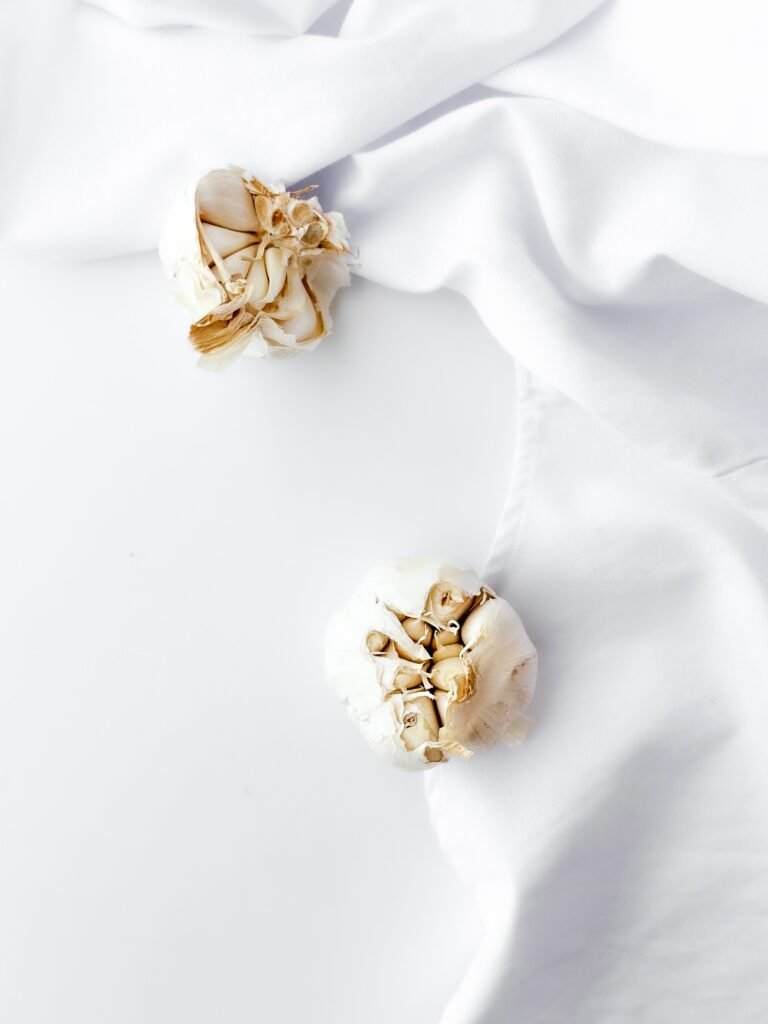
Garlic, whose scientific name is Allium sativum, has a number of sulphur compounds, one of which is allicin. This compound is formed when fresh garlic is crushed or chopped.
A scientific review of the use of garlic in dermatology looked at 23 studies concerning garlic preparations, and the researchers identified possible dermatological applications such as those relating to skin aging, wound healing, psoriasis, infections, and other conditions.
Researchers usually use specific garlic preparations and concentrations. This does not mean that rubbing raw garlic on your face will have the same results.
7 Potential Garlic Benefits for Skin
1. Provides Antioxidant Compounds
Researchers study garlic for skin benefits partly because it has antioxidants. Antioxidants help the body handle free radicals, which are unstable molecules involved in oxidative stress.
Garlic contains organosulfur compounds and other plant chemicals with antioxidant properties. This makes it interesting to scientists studying oxidative damage and overall health.
Even though garlic has antioxidants, putting it on your face will not instantly brighten your skin, remove wrinkles, or reverse aging.
2. Has Antimicrobial Properties
In experimental studies, garlic and various compounds obtained from it have shown antimicrobial activity against different microorganisms.
Because of this, garlic often comes up in discussions about natural acne remedies. However, just because it works in a lab does not mean raw garlic is safe to use on your skin for acne.
The effects depend on how strong the garlic is, how it is prepared, how long it touches your skin, and your skin’s condition.
3. Might have anti-inflammatory effects
Garlic may also help the skin because it has anti-inflammatory properties. Scientists have studied how garlic compounds affect processes related to inflammation.
This is why garlic preparations have been studied as possible treatments for some skin conditions. Still, you should not use raw garlic to treat inflammatory skin problems like eczema, psoriasis, rosacea, or severe acne.
Each skin condition has its own causes and may need a specific treatment.
4. Has been studied as regards certain skin conditions
Garlic preparations have been included in research on fungal infections, psoriasis, alopecia areata, wound healing, keloid scars, and other dermatological conditions.
This does not mean garlic can cure these conditions at home. The garlic extracts used in studies are often very different from the garlic you have in your kitchen.
When looking at garlic’s skin benefits, consider the exact form of garlic that researchers studied.
5. It can form part of a healthy diet.
Eating garlic is very different from applying it to your skin.
You can eat garlic as part of a balanced diet with vegetables, fruits, whole grains, healthy fats, and protein. It also has plant compounds that scientists are still studying for their health effects.
There is no need to call garlic a ‘detox’ treatment. Your liver and kidneys already handle most of the body’s waste products.
6. Has potential in research into healthy aging
The idea that garlic can prevent wrinkles just because it has antioxidants is more complicated than it seems.
Oxidative stress plays a role in aging, so researchers are interested in plant compounds with antioxidants. However, there is no strong proof that putting garlic on your face removes wrinkles.
There is a great deal of evidence in support of sun protection and the American Academy of Dermatology suggests that broad-spectrum, water-resistant sunscreen with a rating of SPF 30 or higher should be used in order to help prevent premature skin aging.
7. May contribute to overall skin health indirectly
Many things affect your skin health, not just one ingredient. Diet, sleep, sun exposure, smoking, skincare habits, genetics, hormones, and medical conditions all play a part.
Eating garlic as part of a varied diet may give you some helpful plant compounds. Still, it does not guarantee clear, glowing, or younger-looking skin.
Think of garlic as one part of a healthy lifestyle, not as a cure for skin problems.
Does garlic have any effect on acne?
Many people are interested in garlic for skin because of its antimicrobial properties. It seems logical to try it against the bacteria that cause acne.
However, acne is more complicated. It can be caused by too much oil, blocked pores, inflammation, bacteria, hormones, and genetics.
Even more significant is the fact that raw garlic can cause serious irritation to the skin. According to the American Academy of Dermatology’s acne guidelines, evidence-based topical treatments should include benzoyl peroxide, topical retinoids, salicylic acid, and azelaic acid.
Raw garlic is not a recommended treatment for acne.
Why You Should Not Put Raw Garlic on Your Face
This is one of the most important things to understand about using garlic for your skin.
A systematic review carried out in 2021 on garlic burns looked at 32 published articles relating to 39 patients, most of which described garlic-related injuries as second-degree burns, although in some instances the tissue involved had necrosed.
Fresh garlic can cause irritation, contact dermatitis, blisters, and chemical burns. The risk is higher if crushed garlic stays on your skin for a long time or is covered up.
For this reason, you should not rub freshly cut garlic on pimples or leave crushed garlic on your face overnight.
Garlic for Dark Spots and Skin Brightening
Some people claim garlic helps remove dark spots, but there is no strong clinical evidence that homemade garlic treatments safely get rid of hyperpigmentation.
In fact, irritating your skin can make things worse. Skin inflammation can cause dark spots, especially after acne or other skin problems.
The American Academy of Dermatology says sun protection is key for preventing and managing dark spots. Tinted sunscreens with iron oxide can give extra protection against visible light that may worsen pigmentation.
Does Garlic Prevent Wrinkles?
Even though garlic has antioxidants, this does not mean garlic paste is a natural remedy for wrinkles.
UV exposure is a major factor in premature skin aging and, as the American Academy of Dermatology points out, daily protection of the skin from the sun can help to reduce premature aging.
There is much stronger evidence for using daily sunscreen, avoiding tanning, moisturizing, not smoking, and following a dermatologist’s advice than for using garlic on wrinkles.
Garlic eaten versus garlic applied to the skin
It’s important to understand the difference when discussing garlic’s benefits for skin.
| Eating Garlic | Applying Raw Garlic |
| Common food ingredient | Can irritate skin |
| Provides plant compounds | Can cause dermatitis |
| Fits into a balanced diet | May cause chemical burns |
| Studied for wider health effects | Not an established acne treatment |
Eating garlic in food does not expose your skin to the concentrated, irritating substances found in crushed, raw garlic.
What concerning the skin of the garlic or the peel of the garlic?
Sometimes, ‘garlic skin’ refers to the thin, papery layer around the garlic bulb, not human skin.
Researchers have studied garlic peels because they contain plant compounds and could be used as an agricultural by-product.
Research on garlic peels is not related to improving human skin, so there is no reason to rub garlic skins or peels on your face.
Safer Ways to Use Garlic for Skin
If you want to try garlic for your skin, it’s safest to avoid making a strong homemade garlic mask.
Eat Garlic as Part of Your Diet
You can get garlic’s plant compounds by including it in your meals as part of a varied diet, without needing to eat large amounts.
Choose Formulated Skincare Products
If you want a garlic-based skin product, choose one made for skin use instead of applying raw garlic. Always read the product instructions carefully.
Patch Test New Products
Be careful when trying new skincare products, especially if you have sensitive skin. If a product causes burning, redness, swelling, blisters, or itching, stop using it.
Frequently Asked Questions
Can Garlic Clear Pimples?
There is not enough evidence that raw garlic is safe or effective for clearing acne. Proven ingredients like benzoyl peroxide, salicylic acid, azelaic acid, and topical retinoids have much more support.
Can I put garlic directly on my face?
It’s best to avoid this. Medical reports show that fresh garlic can cause dermatitis and chemical burns.
Does garlic cause your skin to glow?
There is no strong evidence that using garlic on your skin makes it glow. It’s better to focus on gentle skincare, sun protection, enough sleep, good nutrition, and proper moisturizing.
Does garlic eliminate dark spots?
There is not enough evidence that garlic safely removes dark spots. In fact, irritation from garlic could make pigmentation problems worse.
Can Garlic Remove Wrinkles?
Even though garlic has antioxidants, there is no strong evidence that using it gets rid of wrinkles.
Final Thoughts
It’s interesting that researchers have studied garlic’s possible skin benefits, since it has antioxidant, antimicrobial, and anti-inflammatory compounds. Scientists have also tested specific garlic preparations for different skin uses.
You should not use garlic’s possible skin benefits as a reason to put fresh garlic on your face, since raw garlic can cause serious irritation and even chemical burns. It’s much safer to eat garlic as part of a healthy diet or choose properly formulated skincare products.
Helpful YouTube Resource
Here’s a helpful video:
References
1. Pazyar N, Feily A. — Garlic in Dermatology
https://pubmed.ncbi.nlm.nih.gov/25386259/
2. Hitl M, et al. — Garlic Burn Injuries: A Systematic Review of Reported Cases
https://pubmed.ncbi.nlm.nih.gov/33571752/
3. Borrelli F, et al. — Garlic (Allium sativum L.): Adverse Effects and Drug Interactions in Humans
https://pubmed.ncbi.nlm.nih.gov/17918162/
4. American Academy of Dermatology — Acne Clinical Guideline
https://www.aad.org/member/clinical-quality/guidelines/acne
5. American Academy of Dermatology — 11 Ways to Reduce Premature Skin Aging
https://www.aad.org/public/everyday-care/skin-care-secrets/anti-aging/reduce-premature-aging-skin
6. American Academy of Dermatology — How to Choose the Right Sunscreen
https://www.aad.org/public/everyday-care/sun-protection/shade-clothing-sunscreen/choosing-right-sunscreen

Kevin Fletcher is a seasoned writer with over 10 years of experience crafting engaging and informative content in the health, fitness, and wellness industries. Passionate about helping readers live healthier lives, Kevin combines research-backed insights with practical tips to inspire positive change.