
Now Reading: Healthy Thanksgiving Sides: 15 Lighter Dishes Everyone Will Eat
-
01
Healthy Thanksgiving Sides: 15 Lighter Dishes Everyone Will Eat
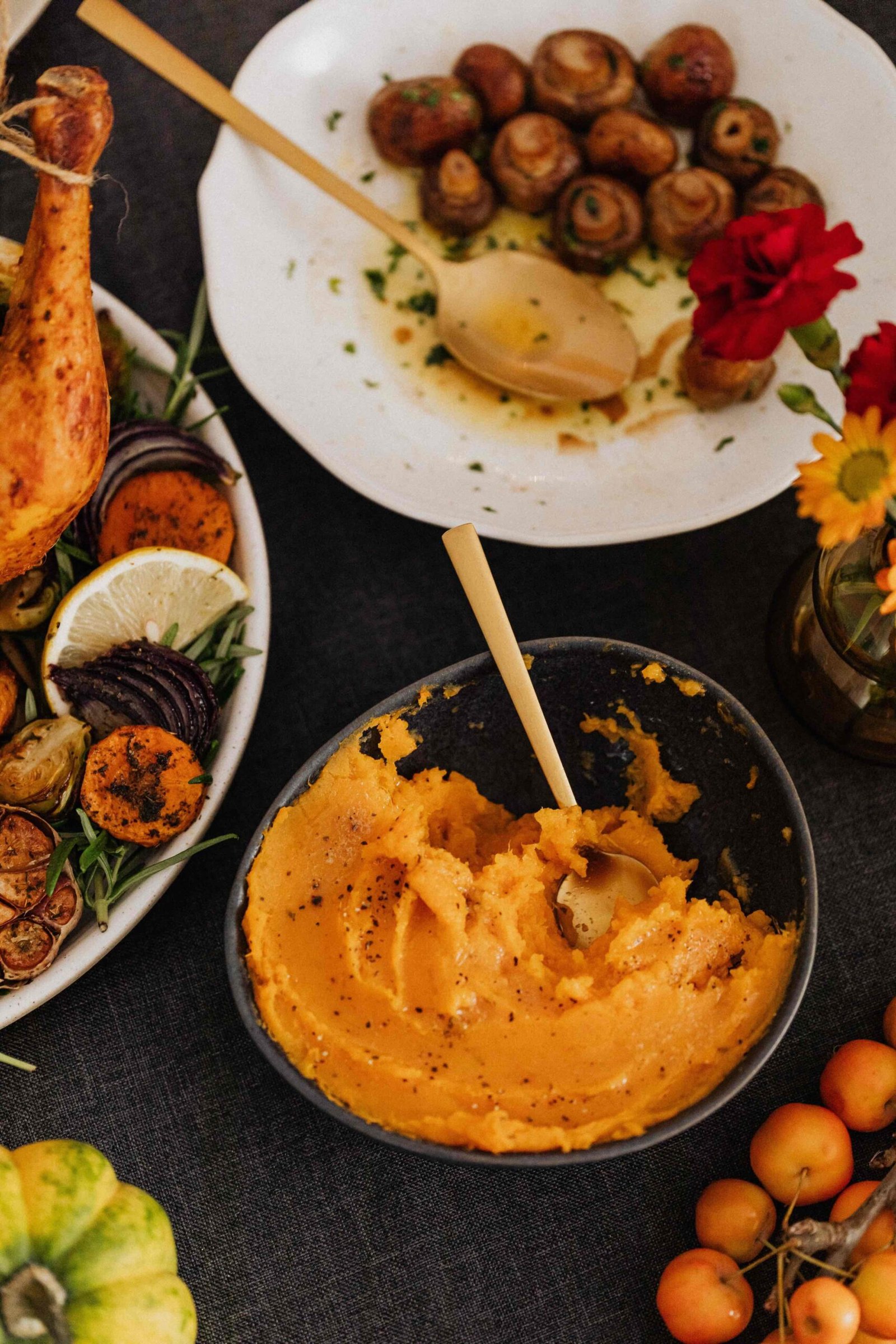
Healthy Thanksgiving sides include garlic mashed potatoes, roasted Brussels sprouts, lemony green beans, and a crisp apple slaw. You keep the flavors people love, use the right amount of butter and oil, and leave some vegetables plain without sweet glazes or creamy toppings.
Your family’s favorite casserole still belongs on the table. A good holiday menu has variety: something creamy, something crisp, a bit of sweetness, and something sharp to balance the gravy. You don’t have to change every dish.
Each of the 15 options below makes six small side servings, except the cranberry sauce, which makes about 12 condiment portions. Choose 4 or 5 for your meal. Cooking times are a guide—check the texture to know when each dish is done.
What makes a Thanksgiving side light?
The main difference usually comes from the extras. Measure your cooking fat, use broth to loosen mashed vegetables, and let a bit of cinnamon or orange zest add flavor to sweet dishes. Keep the nuts and cheese—they add something you’d miss otherwise.
Olive oil is great for roasting, but it still has calories. Replacing a tablespoon of butter with oil doesn’t always lower the calories. The amount you use is what matters.
15 healthy Thanksgiving sides to put on the table
1. Garlic mashed potatoes with a little butter
Ingredients: 2 lbs Yukon Gold potatoes (cut into 1″ pieces), 4 peeled garlic cloves, 1 tbsp butter (about 14g), ½ cup warm 1% milk, ¼ tsp fine salt, black pepper and 2 tbsp chopped chives.
Cover the potatoes and garlic with cold water, bring to the boil and then simmer for 15-20 minutes until a fork slips through easily. Drain well and return to the warm pot for a minute or so to get rid of any excess moisture. Mash with the butter and then fold in the milk, salt, pepper and chives.
Leave the garlic in the mash—it adds flavor without needing extra butter. Use a hand masher, since a blender can make the potatoes gluey.
2. Roasted Brussels sprouts with lemon
Ingredients: 1½ lbs Brussels sprouts (trimmed and halved), 1 tbsp olive oil, ¼ tsp fine salt, black pepper, zest of ½ lemon, 1 tbsp lemon juice.
Preheat the oven to 425°F. Get the sprouts dry, toss with the oil, salt and pepper and arrange cut side down on a large metal sheet pan. Roast for 20–30 minutes until the undersides are deeply browned and the centres are tender. Finish with some lemon zest and juice.
Make sure there’s space between the pieces. If your pan is crowded, use two pans. Adding more oil won’t prevent steaming when vegetables are packed together.
3. Thyme carrots with a small butter finish
Ingredients: 1½ lbs carrots (peeled and cut diagonally into ½” slices), ½ tbsp olive oil, 1 tsp thyme leaves, ¼ tsp fine salt, pepper, 1 tsp butter (approx 5g).
Toss the carrots with the oil, thyme, salt and pepper. Spread out on a parchment lined sheet pan and roast at 425°F for 25–35 minutes, stirring once. They should have browned edges and no hard centre. Transfer to a bowl and toss with the tbsp of butter while hot.
Add the butter at the end so the flavor stays on the surface. The carrots don’t need a honey glaze, especially with cranberry sauce and sweet potatoes already on the table.
4. Cinnamon roasted sweet potatoes
Ingredients: 2 lbs sweet potatoes (scrubbed and cut into ¾” cubes), 1 tbsp olive oil, ½ tsp cinnamon, ¼ tsp fine salt, black pepper.
Just toss everything together and spread it out over two sheet pans. Roast at 425°F for 25–35 minutes, flipping once, until tender and browned. Check the smaller pieces first as they can go a bit darker than the larger cubes before they actually soften.
Serve them as they are, or add a bit of orange zest. There’s no marshmallow topping, so this is a simple sweet potato dish with the flavor you expect and no extra sugar.
5. Lemon green beans with toasted almonds
Ingredients: 1½ lbs trimmed green beans; 2 tbsp sliced almonds; 2 tsp olive oil; 1 tbsp lemon juice; ¼ tsp fine salt; pepper.
Toast the almonds in a dry skillet over medium-low heat, stirring until they’re lightly golden, then remove them. Cook the beans in boiling water for 4-6 minutes until tender but with a slight bite. Drain well and toss with the oil, lemon juice, salt and pepper. Scatter the almonds on top just before serving.
For a nut-free version, just leave out the almonds and add lemon zest. If you make this ahead, cool the beans quickly and refrigerate. Reheat before adding the lemon and almonds.
6. Browned mushrooms and green beans
Ingredients: 1 lb sliced mushrooms; 1 lb trimmed green beans; 1 tbsp olive oil (divided); 2 minced garlic cloves; 1/4 cup unsalted vegetable broth; 1/4 tsp fine salt; pepper.
Boil the beans for 4-6 minutes and drain. In the meantime cook the mushrooms in two batches in a wide skillet, using half the oil for each batch. Allow the liquid released by the mushrooms to reduce before stirring frequently. Once browned, combine the mushrooms and add the garlic. Cook for 30 seconds then add the broth and beans, toss until hot and season.
This is the mushroom and bean combination without condensed soup or fried onions. Browning the mushrooms is what gives the dish its character.
7. Potato and cauliflower mash
Ingredients: 1 lb peeled potatoes (1″ pieces), 1 lb cauliflower florets, ½ cup warm 1% milk, 1 tbsp butter, ¼ tsp fine salt, pepper and chopped parsley.
Simmer the potatoes in water for 15-20 mins. Steam the cauliflower separately for 10-15 mins until very soft. Drain both well and mash together with the milk and butter. Season and finish with the parsley.
Including some potato gives the mash a more familiar texture than using only cauliflower. Add the milk slowly, since cauliflower holds a lot of water and you might not need it all. This is an alternative to the first potato dish, not a second mash to serve together.
8. Tart cranberry-orange sauce
Ingredients: 1 (12 oz) bag of fresh or frozen cranberries; ½ cup orange juice; ½ cup water; ⅓ cup granulated sugar; 1 tsp orange zest.
Bring the cranberries, juice, water and sugar to a simmer in a saucepan. Cook uncovered for 10–15 minutes, stirring occasionally, until the berries have burst and the sauce is beginning to thicken. Stir in the zest and cool before refrigerating. It will thicken further as it chills.
This sauce is meant to be tart. Taste a cooled spoonful before adding more sugar, since cranberries can be sharp and it’s hard to judge when the sauce is hot. Serve it in a small bowl with a spoon, not as a large side.
9. Apple and red cabbage slaw
Ingredients: 4 cups finely shredded red cabbage; 2 thinly sliced apples; 2 tablespoons apple cider vinegar; 1 tablespoon olive oil; 1 teaspoon Dijon mustard; ¼ teaspoon fine salt; pepper.
Whisk the vinegar, oil, mustard, salt and pepper in a large bowl. Add the cabbage and toss well. Fold in the apples just before serving (so they stay crisp) and coat them in the dressing.
The slaw adds crunch to a plate that might otherwise be all soft foods. For a softer texture, dress the cabbage an hour ahead and chill it. Keep the apple slices separate until you’re ready to toss everything together.
10. Roasted butternut squash with sage
Ingredients: 1½ lbs peeled, seeded butternut squash (cut into ¾” cubes); 1 tbsp olive oil; 1 tbsp chopped fresh sage; ¼ tsp fine salt; pepper; 1 tbsp lemon juice.
Toss the squash with the oil, sage, salt and pepper. Spread out on a large sheet pan and roast at 425°F for 25–35 minutes, turning once, until browned and easily pierced with a fork. Add the lemon juice after cooking.
Precut squash is a good shortcut when you’re busy. Make sure the pieces are even, and cut down any large chunks before roasting.
11. Warm brown rice and mushroom pilaf
Ingredients: 3 cups cooked brown rice; 8 oz sliced mushrooms; 1 finely diced onion; 1 tbsp olive oil; ½ tsp dried thyme; ¼ cup unsalted vegetable broth; ¼ tsp fine salt; 2 tbsp parsley.
Cook the onion in the oil over medium heat for about 5 minutes. Add the mushrooms and thyme and cook for another 8-10 minutes until the mushrooms have softened and their liquid has mostly gone. Stir in the rice and the broth, cover and heat through. Add the salt and parsley.
Use freshly cooked rice or rice that’s been cooled and refrigerated quickly. When reheating pilaf made with chilled rice, heat it to 165°F and check the center with a food thermometer.
12. Shaved Brussels sprout and apple salad
Ingredients: 1 lb Brussels sprouts (trimmed and very thinly sliced), 1 thinly sliced apple, 2 tbsp chopped walnuts, 2 tbsp lemon juice, 1 tbsp olive oil, 1 tsp Dijon mustard, ¼ tsp fine salt.
Whisk the lemon juice, oil, mustard and salt. Toss with the sliced sprouts and chill for 30 minutes to soften the sprouts a little. Add the apple and walnuts just before serving.
Slice the sprouts thinly with a sharp knife or a food processor. Thick pieces will be tough in a raw salad. Choose either this salad or the roasted sprouts, depending on your oven space. There’s little reason to make both for a small group.
13. White bean and roasted carrot salad
Ingredients: 1 lb carrots, sliced 1/2 inch thick; 1 tbsp olive oil, divided; two 15 oz cans no salt added white beans, drained and rinsed; 2 tbsp lemon juice; 1/4 cup chopped parsley; 1/4 tsp fine salt; pepper.
Toss the carrots with 2 tsp of the oil and roast at 425°F for 25–35 minutes until tender and browned. Whisk together the remaining 1 tsp of oil, the lemon juice, salt and pepper. Toss the warm carrots with the beans, the dressing and the parsley.
Serve this dish warm or cold. The beans make it more filling for anyone wanting a veggie-based plate. Handle the beans gently so they stay whole.
14. Roasted broccoli with Parmesan
Ingredients: 1½ lbs broccoli florets (stems peeled and cut into thin slices); 1 tbsp olive oil; ¼ tsp fine salt; pepper; 3 tbsp finely grated Parmesan; 1 tbsp lemon juice.
Dry the broccoli, toss with the oil, salt and pepper and spread out over one large sheet pan or two smaller ones. Roast at 425°F for 18–25 minutes until the stems are tender and the tips are browned. Add the Parmesan in the final 2 minutes of roasting and finish with a splash of lemon juice.
Finely grated cheese covers more than thick shavings. For a dairy-free version, leave out the cheese and use extra lemon zest. If you’re serving vegetarians, check the cheese label, since some Parmesan contains animal rennet.
15. Herby yogurt dip with a crunchy vegetable platter
Ingredients: 1 cup plain low fat Greek yoghurt; 1 tbsp lemon juice; 2 tbsp chopped dill; 1 tbsp chopped chives; ¼ tsp garlic powder; ¼ tsp fine salt; 6 cups of sliced cucumber, bell pepper, carrot and celery.
Mix the dip ingredients and chill for at least 30 minutes. Arrange the vegetables on a platter and bring out the dip just before eating. A cold side is helpful when your stove is full.
For a dairy-free version, use thick, plain, unsweetened plant-based yogurt and adjust the lemon to taste. Healthyeation’s guide to coconut milk yogurt explains the differences and what to look for on the label. Remember, a dairy-free substitute isn’t alwayslower in calories.
How much difference does measuring the fat actually make?
These examples show the extra cooking fat in the three recipes above compared to richer versions of the same dishes. The numbers estimate the calorie difference, not the total calories per serving or the average for all traditional recipes. All other ingredients and the six-portion yield stay the same.
| Dish | Richer comparison batch | Batch above | Approximate reduction per portion |
| Garlic mashed potatoes | 56 g butter | 14 g butter | 50 calories |
| Thyme carrots | 28 g butter | 6.75 g olive oil plus 5 g butter | 18 calories |
| Roasted Brussels sprouts | 54 g olive oil | 13.5 g olive oil | 60 calories |
The calculations are based on the USDA Standard Reference energy table (SR Legacy) which gives salted butter at 36 calories per 5g and olive oil at 119 calories per 13.5g. Take the fat calories of the comparison batch and subtract the fat calories of the lighter batch, divide by 6 and round. The USDA FoodData Central documentation explicitly states that SR Legacy is historical nutrient data. These are ingredient based calculations not laboratory determined values for the finished products.
Which sides should you go for to have a manageable menu?
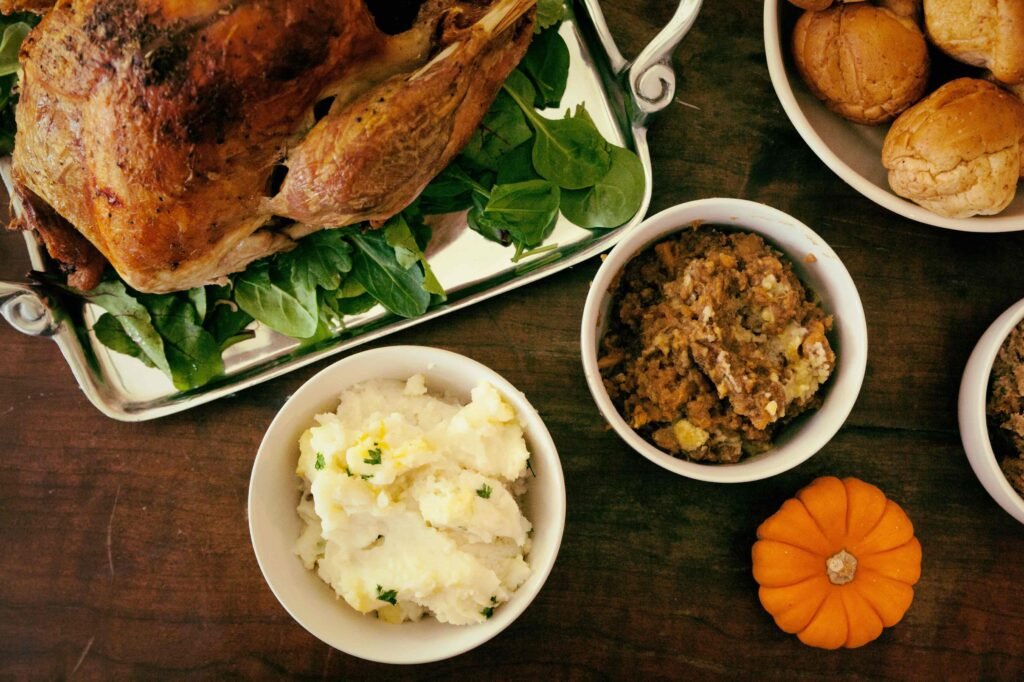
For six people, a good starting menu is garlic mash, lemon green beans, cabbage slaw, cranberry sauce, and a tray of sweet potatoes. This gives you one oven dish, two stovetop dishes, and two cold dishes. Adjust the amounts for your guest count and other menu items.
If your guests avoid animal products, choose roasted sprouts, sweet potatoes, slaw, cranberry sauce, and white bean salad. Check the ingredients on packaged items like broth or mustard, and keep serving utensils separate if there are allergies.
Don’t crowd all your roasted vegetables into the oven at once and expect the same results. Pan placement and airflow affect browning. Two well-spaced trays are easier to manage than four pans squeezed around a turkey.
What can you pre-make?
| When | What to prepare |
| The day before | Make and refrigerate the cranberry sauce and yogurt dip. Shred cabbage, mix dressings, and wash and dry suitable vegetables; store separately in covered containers. |
| Earlier on Thanksgiving | Cook the mash and pilaf if needed, then cool promptly in shallow containers and refrigerate. Set out serving dishes and utensils. |
| Before serving | Roast the chosen vegetables. Reheat prepared hot sides to 165°F. Slice apples, dress salads and add nuts or cheese. |
For food safety FoodSafety.gov recommends that perishable food be refrigerated within two hours (or one hour if the temperature is above 90°F). The fridge should be kept at 40°F or below. Food should be put into shallow containers as soon as possible rather than leaving a deep pot on the counter to cool.
How should you store and reheat the Thanksgiving sides?
Label the containers with the date you’re cooking. For storage advice on specific foods and ingredients refer to the USDA FoodKeeper resource. The federal cold chain chart will tell you that soups and stews and casseroles containing eggs have a shelf life of three to four days in the fridge. Those entries should not be interpreted as a guarantee of shelf life for any individual salad, sauce or dip.
Reheat leftovers to 165°F. When warming mash, stir in a little milk or water. Spread roasted vegetables on a pan instead of piling them in a dish. Keep slaw and raw salads cold, and store the dressing separately if you can.
Choose sides that fit your kitchen and your guests. A well-browned tray of vegetables, a good bowl of potatoes, and a crisp salad will do more for your meal than squeezing in another casserole you don’t have room to cook.
Sources
- USDA National Agricultural Library: Standard Reference energy table. Butter entry NDB 01001; olive oil entry NDB 04053. Historical report dated January 8, 2019.
- USDA FoodData Central: data documentation. Context for SR Legacy nutrient data.
- FoodSafety.gov: four steps to food safety. Refrigeration, cooling, holding temperatures and microwave heating.
- FoodSafety.gov: safe minimum internal temperatures. Leftover reheating temperature.
- FoodSafety.gov: cold food storage chart. Storage guidance for the named food categories.
- FoodSafety.gov: FoodKeeper. USDA-developed resource for specific storage questions.

Kevin Fletcher is a seasoned writer with over 10 years of experience crafting engaging and informative content in the health, fitness, and wellness industries. Passionate about helping readers live healthier lives, Kevin combines research-backed insights with practical tips to inspire positive change.