
Now Reading: Turmeric Benefits for Hair: 7 Benefits and How to Use It
-
01
Turmeric Benefits for Hair: 7 Benefits and How to Use It
Turmeric is no longer just a kitchen spice. Today, you can find this bright yellow ingredient in shampoos, scalp treatments, hair masks, and many other beauty products. As turmeric becomes more popular, more people are curious about its benefits for hair and whether it can actually help hair grow.
Turmeric comes from the Curcuma longa plant and contains active substances called curcuminoids, with curcumin being the most famous. Research shows that curcumin has antioxidant and anti-inflammatory effects, but there is less proof that it directly helps hair grow. Here’s what science has found so far.
Is turmeric beneficial for your hair?
Most claims about turmeric’s benefits for hair are based on what scientists know about curcumin, not on clinical studies proving that turmeric helps hair grow.
A systematic review and meta-analysis carried out in 2023 examined 66 randomized controlled trials and concluded that taking turmeric or curcumin supplements led to improvements in various indicators of inflammation and oxidative stress. The studies, however, did not prove that applying turmeric to your scalp causes hair to grow.
In hair care, turmeric is better viewed as an interesting natural ingredient for the scalp rather than a proven solution for hair loss.
7 Potential Turmeric Benefits for Hair and Scalp
1. Provides Antioxidant Compounds
One benefit of turmeric for hair has been studied a lot, but it is only indirectly related to its antioxidant properties. Oxidative stress happens when there are more free radicals than the body’s antioxidants can handle.
Curcumin has shown antioxidant activity in a number of studies, and a scientific review from 2021 stated that turmeric and curcumin have antioxidant and anti-inflammatory properties.
Because of this, researchers in cosmetics and dermatology are interested in turmeric. However, just because it has antioxidant effects does not mean it can prevent hair loss.
2. Has Anti-Inflammatory Properties
Turmeric is also added to skin and scalp products because curcumin has anti-inflammatory effects.
An analysis of 66 randomized trials previously referred to showed that turmeric or curcumin supplementation led to reductions in various inflammatory markers such as C-reactive protein, TNF-α, and IL-6.
A healthy, comfortable scalp makes it easier to keep up with your hair-care routine. Still, putting turmeric powder directly on an irritated scalp will not fix the root problem.
3. May offer support for scalp care
The benefits of turmeric for hair may actually be benefits for the skin under your hair.
A systematic review concerning turmeric and skin health found 18 suitable human studies that looked at either oral or topical turmeric or curcumin. While the researchers noted some early evidence of possible dermatological benefits, they also emphasized that more research is needed.
A well-made turmeric scalp product could be helpful if your skin can handle it, but turmeric should not replace medical treatment for scalp conditions.
4. Has Antimicrobial Properties
Lab studies have also found that curcumin has antimicrobial properties. This has made people more interested in using turmeric in scalp and skin products.
Just because something shows antimicrobial effects in the lab does not mean a homemade turmeric paste can cure a bacterial or fungal scalp problem.
It’s important to remember that having a promising biological effect is not the same as being a proven treatment.
5. Could Have Potential for People with Dandruff-Prone Scalps
Dandruff usually leads to flaking and itching and results from the interaction between the oils on the scalp, the condition of the skin, and the Malassezia yeast.
Turmeric’s anti-inflammatory and antimicrobial properties make it interesting for scalp care research, but there is not enough strong evidence to show that turmeric alone can reliably cure dandruff.
If you have ongoing or severe dandruff, it’s best to use proven treatments and get professional advice instead of relying only on turmeric.
6. It can be incorporated into conditioning treatments.
You can mix turmeric with coconut oil to make a hair mask, but remember that not all the benefits come from turmeric alone.
For instance, a study which appeared in the Journal of Cosmetic Science examined coconut, sunflower, and mineral oils and found that coconut oil was the only one of the three to significantly reduce protein loss from both damaged and undamaged hair.
If a turmeric and coconut oil mask makes your hair feel softer, it’s likely that the coconut oil plays a big role in that result.
7. May Help Make Hair Appear Healthier
Not all benefits of turmeric for hair are about growing new hair. Cosmetic hair care matters too.
A well-made turmeric mask, conditioner, or oil can be part of your routine and may leave your hair feeling smoother, softer, and easier to manage. Other ingredients in the product can also help with these effects.
Remember, hair that looks healthier does not mean you have more active hair follicles.
Does turmeric have a effect on hair growth?
In this case, claims about turmeric’s benefits for hair often go further than what the evidence supports.
Right now, there isn’t enough evidence to show that regular Curcuma longa powder used on the scalp can reliably help hair grow in people. Even though some studies have looked at related compounds and other Curcuma species, this does not mean the turmeric in your kitchen will regrow your hair.
For instance, a randomized study looked at Curcuma aeruginosa, a species that is different from common turmeric (Curcuma longa), in men suffering from androgenetic alopecia. The researchers examined the plant extract either on its own or in combination with minoxidil; the combination did result in improvements, but these results cannot be directly applied to ordinary turmeric powder.
So, turmeric should not be seen as a proven natural alternative to established hair-loss treatments.
Can turmeric help with hair loss?
Hair loss may occur for a variety of reasons, such as genetic factors, hormonal changes, illness, deficiencies in nutrients, medications, autoimmune disorders, and stress.
This means that one natural ingredient alone cannot address all the different causes of hair loss.
The American Academy of Dermatology states that dermatologists are able to determine the cause of hair loss and then suggest an appropriate treatment. In the case of certain types of hair loss, topical minoxidil can be used to promote hair growth and help reduce further loss.
If you notice sudden hair loss, round bald spots, rapid thinning, or a lot of unexpected shedding, it’s best to get professional advice instead of relying on turmeric.
How to Use Turmeric for Hair
If you want to try turmeric, keep your routine simple and avoid using very strong homemade mixtures.
Turmeric Hair Mask
You can mix a small amount of turmeric into a suitable hair mask base. Be careful not to use too much, as turmeric can stain your scalp, hair, clothes, towels, and bathroom surfaces.
Before using it all over, test the mixture on a small area first.
Turmeric and Coconut Oil
Some hair products combine turmeric with oils like coconut oil. Coconut oil can condition hair and has been shown to reduce protein loss.
Just because turmeric is added does not mean the mixture will make hair grow.
Turmeric Shampoo or Conditioner
The simplest way to try turmeric for your hair is to use a store-bought shampoo, conditioner, or scalp product that contains it.
It’s best to follow the manufacturer’s instructions instead of using more product or leaving it on longer to try to get faster results.
Can turmeric stain your hair?
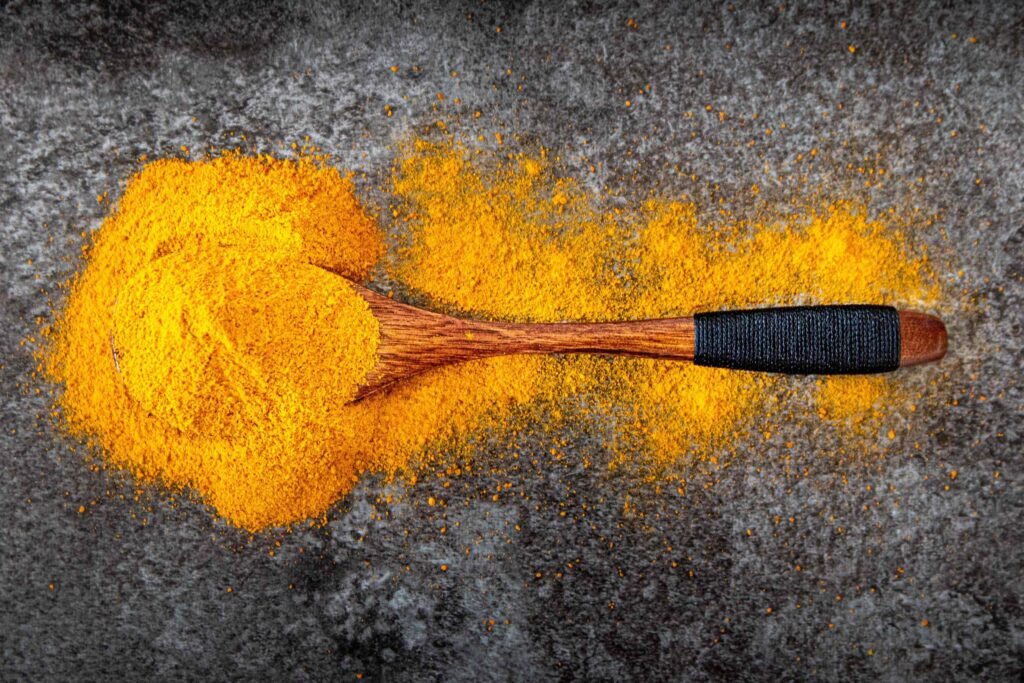
Yes, curcumin is what gives turmeric its bright yellow-orange color, which is why turmeric has long been used as a coloring agent.
This pigment can stain your skin, nails, towels, and clothes, and it can also temporarily change the color of very light hair.
If your hair is blonde, white, gray, bleached, or highlighted, be extra careful. Always do a strand test before applying turmeric to all your hair.
Turmeric Side Effects and Safety
Even though these ingredients are natural, they can still cause reactions. Medical reports have linked curcumin to contact dermatitis and contact urticaria.
If you want to try turmeric for your hair, test any new product on a small area first. If you notice redness, itching, burning, swelling, or a rash, stop using it.
Do not use turmeric mixtures on broken skin, open wounds, or a very irritated scalp. If you have a scalp condition, talk to a dermatologist before trying any DIY treatments.
Frequently Asked Questions
Can turmeric actually help hair to grow?
There is no proof that regular turmeric used on the scalp consistently leads to hair growth in people. While curcumin has some interesting effects, it has not been proven to regrow hair.
Does turmeric thicken hair?
There is no strong evidence that turmeric permanently thickens hair or increases the number of hair follicles.
Can I put turmeric directly on my scalp?
You can find turmeric in ready-made topical products, but raw turmeric can stain and may irritate some people’s skin. It’s smart to do a patch test before using it more widely.
Does Turmeric Help Dandruff?
Turmeric does have anti-inflammatory and antimicrobial properties, but there isn’t enough clinical evidence to call it a proven dandruff treatment.
How frequently should I apply turmeric to my hair?
There is no science-backed schedule for turmeric hair treatments. For commercial products, just follow the manufacturer’s instructions.
Final Thoughts
The most likely benefits of turmeric for hair come from its biological properties and its use in scalp and cosmetic care. Curcumin has antioxidant and anti-inflammatory effects, so turmeric products may fit well in some people’s hair-care routines.
Don’t expect turmeric to guarantee hair regrowth. Current evidence does not show that regular turmeric is a proven remedy for hair loss. Use it carefully, watch for staining or irritation, and seek professional advice if your hair loss is ongoing, sudden, or unexplained.
Helpful YouTube Resource
Here’s a helpful video:
References
1. Dehzad M, et al. — Antioxidant and Anti-Inflammatory Effects of Curcumin/Turmeric: Systematic Review and Meta-Analysis
https://pubmed.ncbi.nlm.nih.gov/36804260/
2. Vaughn AR, et al. — Effects of Turmeric (Curcuma longa) on Skin Health: A Systematic Review of the Clinical Evidence
https://pubmed.ncbi.nlm.nih.gov/27213821/
3. Hewlings SJ, Kalman DS. — Curcumin: A Review of Its Effects on Human Health
https://pmc.ncbi.nlm.nih.gov/articles/PMC5664031/
4. Rele AS, Mohile RB. — Effect of Mineral Oil, Sunflower Oil, and Coconut Oil on Prevention of Hair Damage
https://pubmed.ncbi.nlm.nih.gov/12715094/
5. Chaudhari SP, et al. — Curcumin: A Contact Allergen
https://pubmed.ncbi.nlm.nih.gov/26705440/
6. Pumthong G, et al. — Curcuma aeruginosa and Minoxidil in Male-Pattern Baldness
https://pubmed.ncbi.nlm.nih.gov/21756154/
7. American Academy of Dermatology — Hair Loss: Diagnosis and Treatment
https://www.aad.org/public/diseases/hair-loss/treatment/diagnosis-treat

Kevin Fletcher is a seasoned writer with over 10 years of experience crafting engaging and informative content in the health, fitness, and wellness industries. Passionate about helping readers live healthier lives, Kevin combines research-backed insights with practical tips to inspire positive change.