

Now Reading: Worst Foods for Anxiety: What to Avoid for a Calmer Mind
-
01
Worst Foods for Anxiety: What to Avoid for a Calmer Mind
Anxiety isn’t just in your mind. The foods you eat each day can have a big impact on how calm or anxious you feel. While many people turn to therapy or medication, they often forget about the role of diet. Research shows that what you eat affects your brain, mood, and how you handle stress. In this guide, you’ll learn which foods can make anxiety worse, why they have this effect, and what you can eat instead to help you feel calmer.
The National Institute of Mental Health reports that almost 31% of U.S. adults will have an anxiety disorder at some point in their lives (NIMH). Food isn’t the cause of anxiety, but some foods can make it harder to cope with the symptoms.
What Is Anxiety and Why Does Diet Matter?
Anxiety is a normal reaction to stress, but it becomes a problem when worry, fear, or tension don’t go away and start to feel overwhelming. Common symptoms include racing thoughts, a fast heartbeat, stomach problems, restlessness, and trouble sleeping.
What you eat matters because your brain needs steady blood sugar, balanced hormones, and a healthy gut. Eating the wrong foods can upset these systems. Over time, this can make anxiety worse and happen more often. That’s why knowing which foods to avoid is a key step in managing anxiety naturally.
Worst Foods for Anxiety You Should Limit or Avoid
Here are some of the most common foods that have been linked to more anxiety symptoms. Mental health and nutrition experts widely agree on these.
1. Refined Sugar and Sugary Foods
Refined sugar is one of the worst foods for anxiety. Sweets like candy, pastries, sugary cereals, and desserts cause your blood sugar to rise quickly and then drop. These drops can make you feel irritable, shaky, tired, and more anxious.
A study published in Scientific Reports found that high sugar intake was linked to a higher risk of mood disorders, including anxiety (Nature). Reducing added sugar helps stabilize mood and energy.
2. Artificial Sweeteners
Artificial sweeteners such as aspartame and sucralose might look like better choices, but they can affect your brain in negative ways. Some research suggests that aspartame can lower serotonin levels, which are important for keeping your mood steady.
If you are sensitive to these chemicals, artificial sweeteners can be some of the worst foods for anxiety, especially if you have them every day in diet sodas or sugar-free snacks.
3. Caffeine
Caffeine wakes up your nervous system. A little can help you focus, but too much can make your heart race and leave you feeling nervous or restless. For people with anxiety, caffeine can even feel like a panic attack.
Energy drinks are especially risky. The Mayo Clinic says that having too much caffeine can make anxiety and sleep problems worse (Mayo Clinic). Cutting back on caffeine is important if you want to avoid foods that make anxiety worse.
4. Alcohol
Alcohol might seem relaxing at first, but it quickly upsets your brain’s balance. It affects GABA and serotonin, which are chemicals that help calm your nervous system.
Studies show that alcohol can make anxiety worse during withdrawal, even if you only drink a moderate amount (Harvard Health). For many people, alcohol is one of the most overlooked foods that can make anxiety worse.
5. Highly Processed and Fast Foods
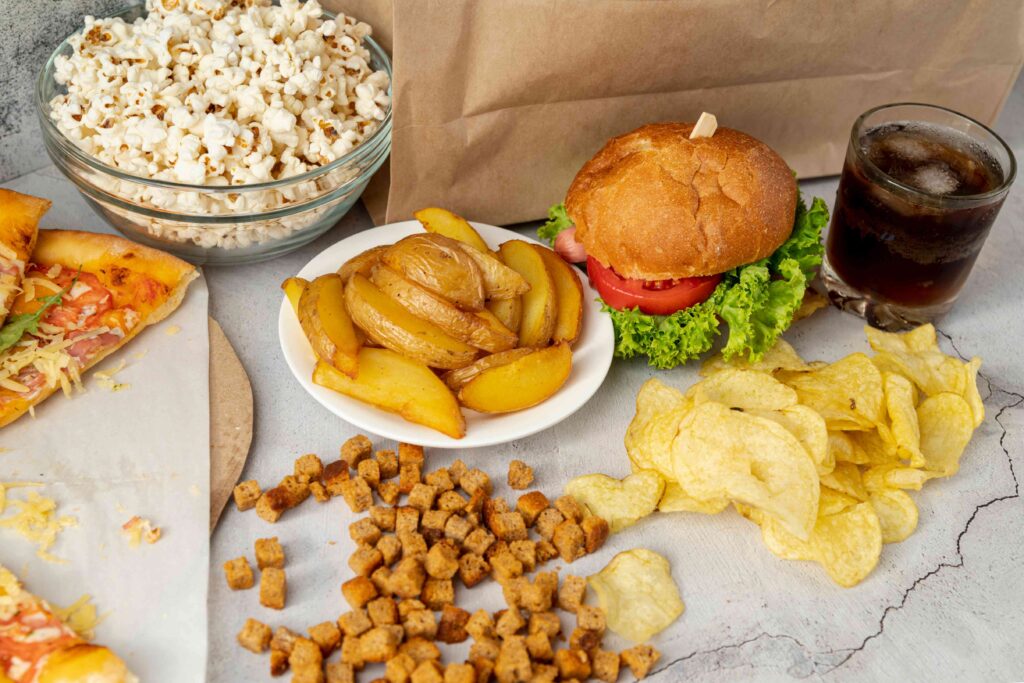
Fast food, frozen meals, chips, and fried foods are full of unhealthy fats, refined carbs, and additives. These foods can cause inflammation, which is linked to anxiety and depression.
A review in Public Health Nutrition found that people who eat a lot of processed foods tend to have higher anxiety levels (Cambridge). Eating these foods often puts them high on the list of foods to avoid for anxiety.
6. High-Sodium Foods
Eating too much salt can raise your blood pressure and increase cortisol, which is your body’s main stress hormone. Processed snacks, fast food, and soy sauce are common sources of extra sodium.
A lot of sodium can cause physical symptoms like a racing heart and muscle tension, which can make anxiety feel worse. If you are sensitive, salty foods can be some of the worst for anxiety.
7. Fruit Juice and Sugary Drinks
Fruit juice doesn’t have fiber and sends sugar into your blood very quickly. Drinks like apple juice, soda, and sports drinks can cause the same blood sugar spikes and crashes as candy.
The American Heart Association warns that sugary drinks can lead to problems with your metabolism and mood (AHA). That’s why these drinks are high on the list of foods to avoid for anxiety.
8. White Bread and Refined Carbohydrates
White bread, doughnuts, and toast made from refined flour break down quickly and raise your blood sugar fast. This can increase adrenaline and cortisol.
Over time, eating a lot of refined carbs can make your mood and energy less stable. That’s why it’s best to limit these foods if you have anxiety.
9. Condiments with Hidden Sugar
Ketchup, “light” dressings, and sauces often contain hidden sugars and additives. These small daily exposures add up.
Checking food labels can help you avoid hidden ingredients that might trigger anxiety.
10. Dairy for Sensitive Individuals
Dairy does not affect everyone the same way. However, for those with lactose intolerance or inflammation sensitivity, dairy may worsen gut health.
Because your gut and brain are closely connected, poor digestion can make anxiety worse. For some people, this means dairy is a food to avoid.
Why These Are the Worst Foods for Anxiety
Most of the worst foods for anxiety share common traits. They spike blood sugar, overstimulate the nervous system, disrupt gut health, or increase inflammation. When these systems are stressed, anxiety symptoms intensify.
You don’t have to avoid these foods perfectly. Just being aware and making small changes over time can really help.
Foods to Eat Instead for Anxiety Support
Replacing the worst foods for anxiety with calming options supports emotional balance. Focus on leafy greens, fatty fish rich in omega-3s, whole grains, fermented foods, nuts, and seeds.
Research shows that omega-3 fatty acids can help lower anxiety symptoms (NIH). Eating balanced meals also keeps your blood sugar steady and supports your brain’s chemical messengers.
Simple Dietary Tips to Reduce Anxiety Naturally
Eat regular meals, limit stimulants, stay hydrated, and avoid skipping breakfast. Mindful eating improves digestion and reduces stress responses linked to food.
When to Seek Professional Help
Food can help your mental health, but it’s not a substitute for therapy or medical care. If anxiety is getting in the way of your daily life, reach out to a qualified professional for help.
Helpful Video Resource
If you want more expert advice, check out this Harvard Medical School video about nutrition and mental health:
Final Thoughts
Understanding the worst foods for anxiety empowers you to make calmer, healthier choices. Small changes add up. When you support your brain with the right foods, managing anxiety becomes more achievable and sustainable.
References
- National Institute of Mental Health – Anxiety Statistics
https://www.nimh.nih.gov/health/statistics/any-anxiety-disorder - Harvard Health Publishing – Alcohol and Anxiety
https://www.health.harvard.edu - Mayo Clinic – Caffeine and Anxiety
https://www.mayoclinic.org - Scientific Reports – Sugar and Mood Disorders
https://www.nature.com - National Institutes of Health – Omega-3 and Anxiety
https://ods.od.nih.gov

Kevin Fletcher is a seasoned writer with over 10 years of experience crafting engaging and informative content in the health, fitness, and wellness industries. Passionate about helping readers live healthier lives, Kevin combines research-backed insights with practical tips to inspire positive change.